
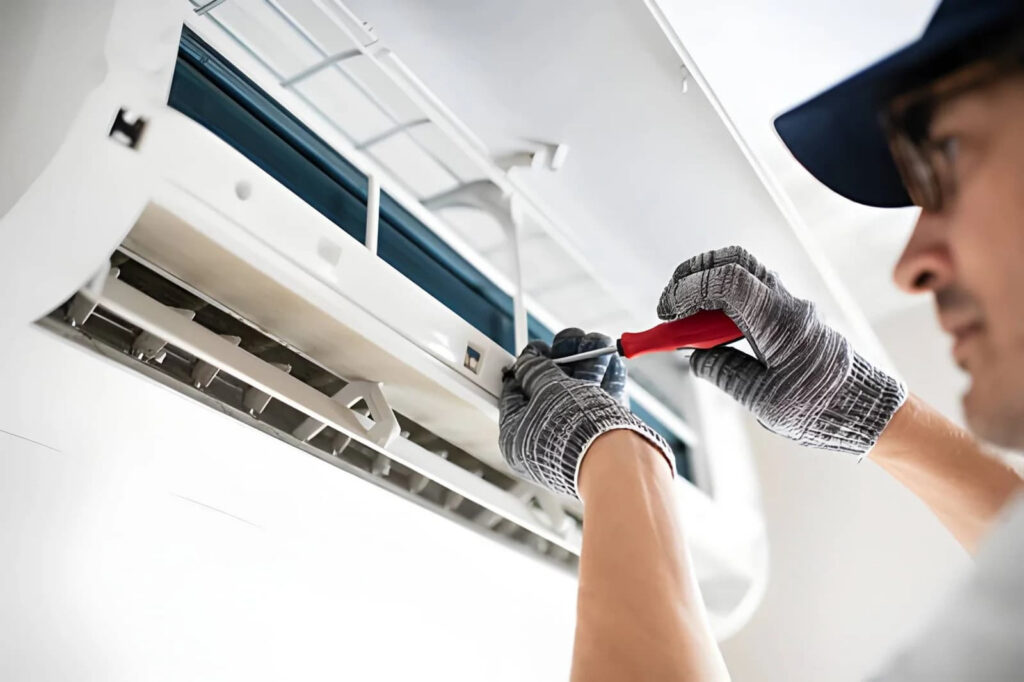
You call for an air conditioning contractor repair, the technician replaces a faulty part, and your home feels comfortable again. Then, a few weeks or months later, the same problem returns. Maybe the vents are blowing warm air. Maybe one bedroom stays hot while the rest of the house is comfortable. Or the system starts turning on and off more often than it should. If that sounds familiar, the replaced part may not have been the whole problem.
In Aliso Viejo, repeated AC trouble can become especially frustrating during warmer months when you depend on your system every day. A repair should do more than get the unit running for the moment. It should help identify why the failure happened in the first place.
Why the Same AC Problem Can Keep Coming Back
An air conditioner is made up of several components that depend on one another. When one part struggles, another part may eventually show the symptoms.
For example, a frozen evaporator coil doesn’t automatically mean the coil itself is defective. Restricted airflow, a dirty filter, a blower problem, or low refrigerant can contribute to freezing. If only the visible symptom is addressed, the underlying issue can remain.
The same idea applies to electrical failures. A capacitor may fail, but replacing it doesn’t necessarily explain why it failed. Excessive electrical load, a struggling motor, or another component problem may still be putting stress on the system.
That distinction matters. You don’t want to keep paying for the same repair without knowing what caused it.
Five Problems That Can Hide Behind Repeat Repairs
1. Restricted airflow
Weak airflow is one of the easiest AC problems for a homeowner to notice, but the cause isn’t always obvious.
A dirty filter is one possibility. So are blocked vents, dirty coils, duct restrictions, or a blower that isn’t moving enough air. When airflow is restricted, the system can run longer while some rooms remain uncomfortable.
This is where a proper HVAC diagnostic can make a difference. Instead of assuming the filter is responsible, the technician can look at how air is moving through the system and where the restriction may be occurring.
2. A refrigerant leak
If an air conditioner repeatedly needs refrigerant, there may be a leak that hasn’t been addressed.
Adding refrigerant can improve cooling temporarily. But if the refrigerant is escaping, the system will eventually return to the same condition. You may notice warm air, longer cooling cycles, or reduced performance before the problem becomes obvious.
The better question isn’t simply, “How much refrigerant does it need?” It’s, “Why is the refrigerant level low?”
A technician should investigate the system rather than treating every low charge as an isolated refill.
3. Thermostat or control problems
Sometimes the AC equipment is working, but the controls aren’t telling it to work correctly.
A thermostat can have an inaccurate temperature reading, wiring issue, or control problem. That can lead to short cycling, uneven temperatures, or a system that runs longer than expected.
Thermostat placement can matter, too. A thermostat exposed to unusual heat or located near a source of temperature change may not accurately represent the comfort level in the rest of the home.
4. Ductwork problems
You can have a functioning air conditioner and still have a comfort problem.
If ductwork has leaks, damaged connections, or restrictions, conditioned air may not reach certain rooms effectively. This can leave homeowners thinking the AC unit itself needs another repair when the actual problem is somewhere between the equipment and the room.
Our team considers ductwork and the home’s layout when evaluating cooling performance. That broader look can help prevent homeowners from spending money on equipment repairs that don’t address the real comfort issue.
5. An aging system with multiple failing parts
There is also a point when repeated repairs start telling you something about the age and condition of the entire system.
One repair doesn’t necessarily mean an AC replacement is needed. A relatively minor problem on a well-maintained system can be worth fixing.
But if the equipment is older and different components keep failing, the numbers can change. Repeated service calls, declining efficiency, and worsening comfort may make replacement worth discussing.
At Green Air Engineering, we don’t believe an older system should automatically be replaced. We look at the repair needed, the system’s condition, and the likely value of continuing to repair it before discussing the available options.
What a Better Repair Diagnosis Looks Like
A homeowner should come away from an AC service visit knowing more than which part failed.
Start with the symptom, then work backward
If the system is short cycling, the goal should be to understand what is causing that behavior. If one room stays hot, the investigation should consider airflow and distribution rather than automatically blaming the outdoor unit.
A useful AC inspection looks at the system as a whole. Depending on the complaint, that can include airflow, electrical components, thermostat operation, refrigerant levels, coils, blower performance, drainage, and other parts of the equipment.
Explain the repair before starting
Homeowners shouldn’t have to approve an expensive repair without understanding what happened.
A professional should be able to explain what was found, why the component failed, whether anything else appears affected, and what options make sense. Clear communication is especially important when the same problem has already been repaired before.
We take this approach with homeowners in Aliso Viejo. The company says its technicians inspect systems, explain the problem, and provide repair options before work begins. That gives the homeowner a chance to understand the situation instead of simply approving a part replacement.
Questions to Ask When Your AC Keeps Failing
The next time you need air conditioning contractor repair, don’t be afraid to ask a few direct questions:
- What caused this component to fail?
- Is there another problem that could cause the same failure?
- Is the system showing signs of restricted airflow?
- Could a refrigerant leak be involved?
- Does the thermostat appear to be working correctly?
- Is the equipment old enough that repeated repairs should change the repair-versus-replacement decision?
- What should I watch for after the repair?
These questions don’t require HVAC knowledge. They simply help you understand whether you’re getting a solution or another temporary fix.
Why the Home Itself Matters
Every AC system operates inside a particular home. Room sizes, insulation, duct layout, construction materials, electrical components, and the location of the equipment can all affect performance.
That matters when a homeowner keeps experiencing the same comfort issue.
A system that works well in one house may behave differently in another. That’s why Green Air Engineering considers factors such as home size, room configuration, insulation, electrical panels, and ductwork when evaluating HVAC needs.
This home-specific approach is one reason a recurring AC issue deserves a proper inspection instead of another guess based on the last repair.
When Repair Still Makes Sense
A repeat problem doesn’t automatically mean you need a new air conditioner.
If the system is relatively young and the issue involves a manageable component, repair may be the sensible choice. A good repair can restore performance without replacing equipment that still has useful life left.
Replacement becomes more worth considering when repairs are becoming frequent, major components are failing, comfort continues to decline, or the system is reaching the later part of its expected service life.
The decision should come from the condition of the equipment, not from a blanket rule based only on age.
Conclusion
Recurring AC problems are usually a sign that something deserves a closer look. The failed capacitor, frozen coil, weak airflow, or low refrigerant may be the symptom rather than the complete explanation.
For Aliso Viejo homeowners, the goal should be simple: find the reason the system is struggling, understand the repair, and decide what makes sense for the equipment you already own.
At Green Air Engineering, we approach each service call with that bigger picture in mind. We look at the system, the home, and the symptoms together so homeowners can make an informed decision about repair, maintenance, or replacement.
If your AC keeps breaking down after repairs, another quick fix may not be what you need. You may need someone to find out why it keeps happening.